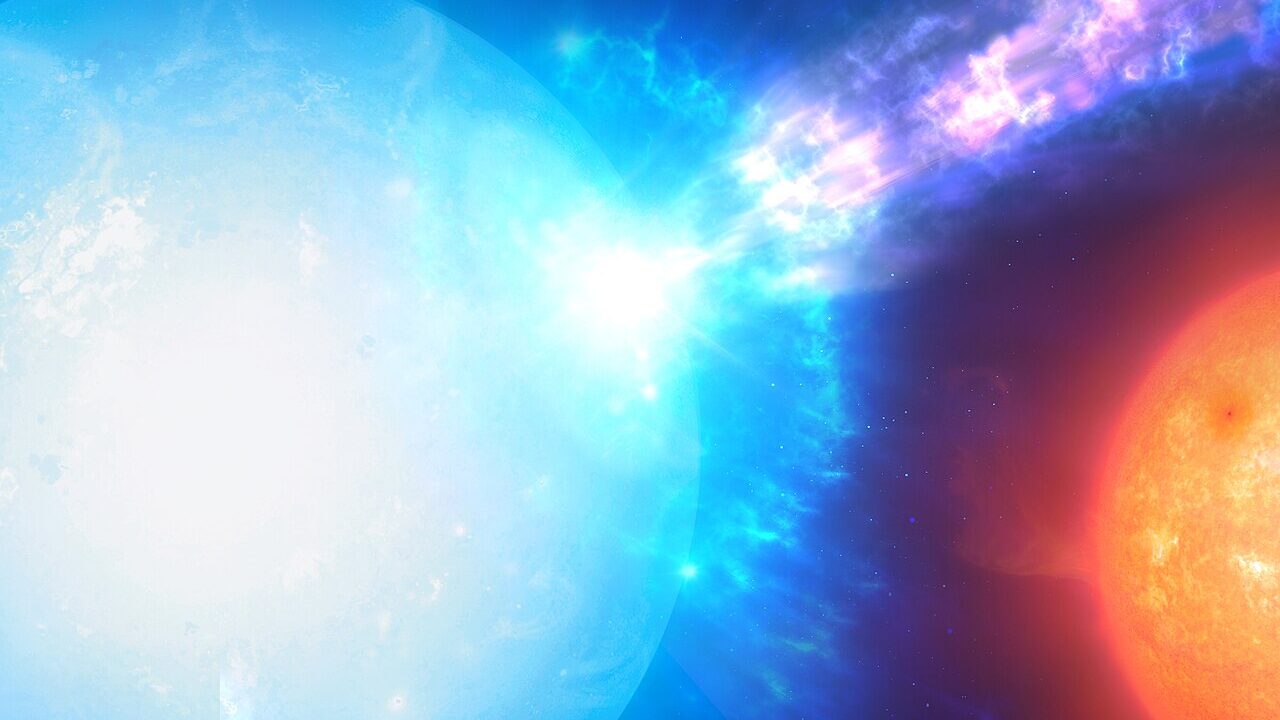
On October 9, 2026, researchers described a planet that appears to have formed from material expelled while its star was dying — a world now orbiting the white dwarf that the star, slightly larger than the Sun, collapsed into.
Astronomers call it a phoenix planet, and the name encodes the surprise. Planets are supposed to be contemporaries of their stars, condensed from the same natal disc within the star’s first few million years. This one seems younger than its sun’s death: assembled, the evidence suggests, from the debris the star shed as it swelled into a red giant and blew its outer layers away, then settled into a disc around the exposed core. If the interpretation holds, the system is a second act of planet formation — worlds not merely surviving stellar death, which astronomers have found before, but beginning after it.
The white dwarf itself is what makes the claim testable. These stellar embers have thin, pristine atmospheres that record the composition of anything falling into them, and they are observed across the galaxy trailing the chemical fingerprints of shredded asteroids and disrupted planets. A planet built from expelled material would carry the processed chemistry of the star’s interior in its own makeup — a signature distinguishable, in principle, from that of a first-generation survivor that predates the collapse.
A second act for planet formation
One system is an anecdote; the reporting notes astronomers will now hunt for more. If phoenix planets prove common, the timeline of planetary systems doubles in length — most stars end as white dwarfs, and each would get a second chance to build worlds from its own remains, with consequences for estimates of how many planets the galaxy holds and where anyone should look for them. NewsWibe’s Health & Science Desk will follow the follow-up observations as they are published.