On October 9, 2026, the Nobel Prize in Physiology or Medicine recognised Karl Deisseroth, Peter Hegemann and Georg Nagel for the discoveries concerning light-gated ion channels that created optogenetics — summarised by Reuters as using light to control individual nerve cells in the brain.
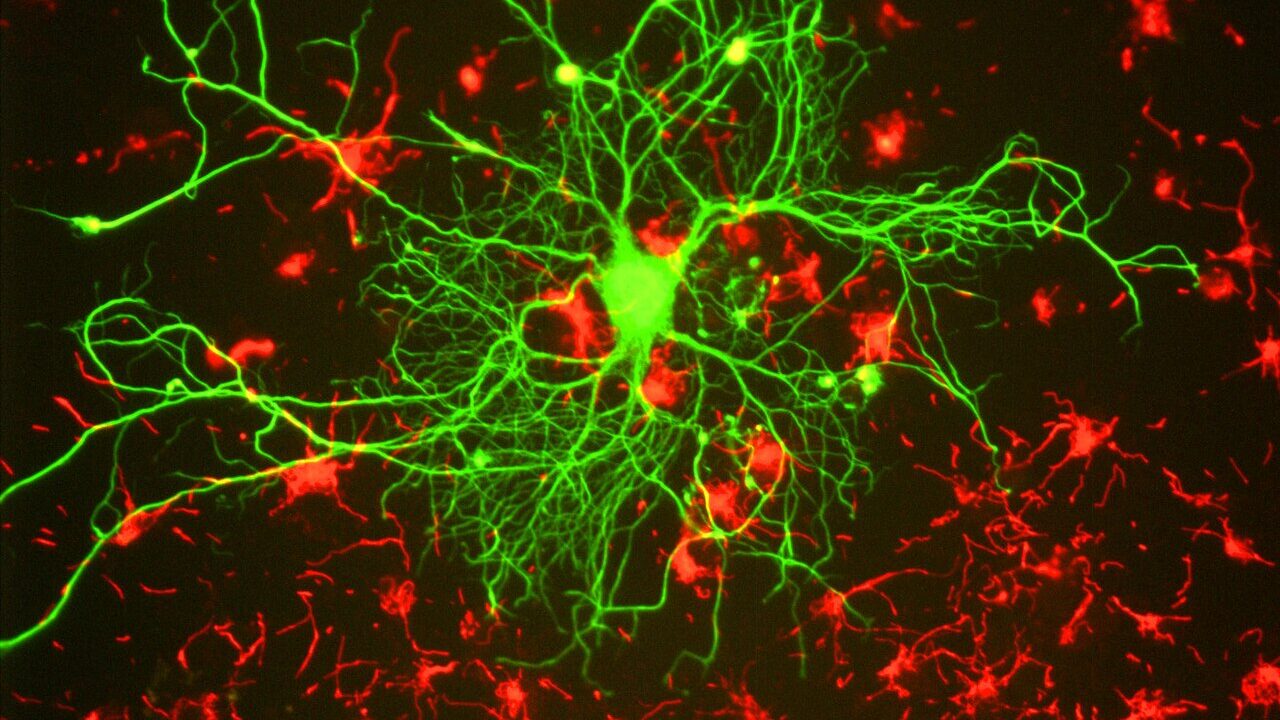
The path to Stockholm ran through a pond alga. Hegemann, studying how the single-celled Chlamydomonas swims toward light, traced its speed to proteins that are simultaneously sensors and switches: channelrhodopsins, which open a pore and fire an electrical signal within milliseconds of blue light striking them. With Nagel, he showed the protein kept its trick when transplanted into foreign cells. Deisseroth’s Stanford laboratory then put the gene into rat neurons in 2005 and drove exact spikes of activity with pulses of light — the experiment that converted a curiosity of algal biology into neuroscience’s favourite instrument, named optogenetics a year later.
The prize honours what the tool made provable. Before optogenetics, researchers largely inferred a circuit’s role from damage or correlation — watch the brain light up near a behaviour, or silence a whole region and observe the deficit. Light gave them a switch with an address: activate this defined set of cells and the behaviour starts; silence them and it stops. That is the difference between a map and an experiment, and the method has since been aimed at circuits involved in memory, movement, mood, Parkinson’s, epilepsy and addiction in animal models, with early clinical exploration in restoring vision.
Precision now, delivery later
The method’s power is its precision, and its limit is delivery — getting genes and light safely to the right cells in a human brain remains the hard, unfinished half. As a laboratory science, though, the verdict the Nobel committee ratified is already history: a generation of neuroscientists thinks in circuits because three researchers taught neurons to answer to light. NewsWibe’s Health & Science Desk will follow Nobel Week reaction from the laureates’ institutions.